Archaeological news about the Archaeology of Later Medieval Europe from the Archaeology in Europe web site
Monday, 1 August 2016
American student finds 12th century Irish brooch on a Galway Beach
McKenna McFadden, an Irish American film and television major at New York University, is in Dublin for the summer with an NYU program. She was walking on the shore of Oney Island in Connemara in the west of Ireland this week when something sitting in the sand caught her eye.
Little did she think it would be a rare artifact from the 12th century.
The NYU Dublin group was being led on a tour of the island by the Connemara-based archaeologist Michael Gibbons.
As McFadden told IrishCentral, “I had been looking at some rabbit burrows with my friend while on a tour of the island lead by archaeologist Michael Gibbons. When stepping back from the burrows, I looked down and saw the back of the brooch and picked it up.
Read the rest of this article...
Thursday, 14 July 2016
History of Danish royal castle 'to be rewritten'
Denmark's biggest royal castle, Vordingborg, is set for an updated history after an archaeological dig shed new light on a key figure in its past.
The castle, located on the southern coast of Zealand facing across the Baltic Sea towards Germany, was originally built in the 12th century by King Valdemar the Great.
Valdemar used it as a base for raids on Germany and, later under Valdemar's son Valdemar II the Victorious, Estonia.
Read the rest of this article...
Sunday, 3 July 2016
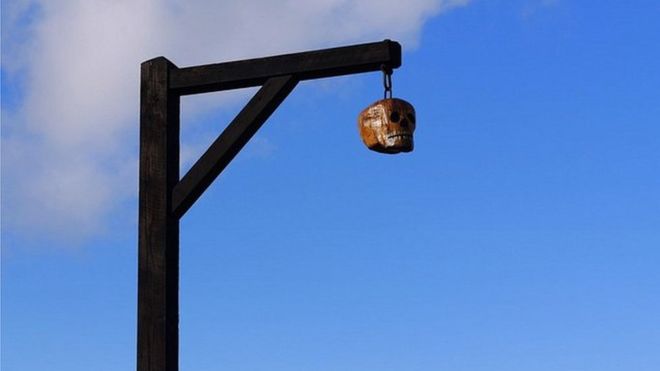
A ghoulish tour of medieval punishments
Is there anything quite as chillingly middle-English as a head swinging mournfully from a set of gallows, silhouetted over some rugged and desolate moorland?
The Oxfordshire town of Thame has announced it is considering bringing back stocks as a tourist attraction, but which other settlements have kept their instruments of medieval correction?
Stocks date back to at least the time of the Black Death in the 14th Century. Labourers were banned from leaving their homes to find better wages elsewhere and those who broke the law were put in stocks.
Every town or village was required by law to have a set. But being put in the stocks was a fairly minor punishment. Many places had whipping posts, pillories and even gallows.
Here's a ghoulish tour of England's harsh past.
Read the rest of this article...
Monday, 27 June 2016
THE DAY OF ARCHAEOLOGY 2016 WILL BE HELD ON FRIDAY 29 JULY!

We are looking for people working, studying or volunteering in the archaeological world to participate with us in a “Day of Archaeology” in July 2016. The resulting Day of Archaeology website will demonstrate the wide variety of work our profession undertakes day-to-day across the globe, and help to raise public awareness of the relevance and importance of archaeology to the modern world. We want anyone with a personal, professional or voluntary interest in archaeology to get involved, and help show the world why archaeology is vital to protect the past and inform our futures.
Explore posts from previous years here...
EMAS Field Trip to Wells Cathedral and Bishop's Palace
Field Trip to Wells Cathedral and Bishop's Palace
Guide: David Beard MA, FSA
Saturday, 9th July 2016
There are still a few places left on this field trip.
You can find further information here...
Ausgrabung am Alten Kirchplatz mit Überraschungen
Archäologen des Landschaftsverbandes Westfalen-Lippe (LWL) haben in Gütersloh das bislang älteste Haus der Stadt aus dem 12. Jahrhundert entdeckt. Nicht nur die Mauer des Kirchhofes war im Keller als Wand verbaut. Auch die Schieferplatten des ersten Daches, Reste der Glasfenster und Bruchstücke der mittelalterlichen Tonpfeifen der Bewohner tauchten unter den Werkzeugen der Fachleute in einem Haus am Kirchplatz 11 in Gütersloh auf. Noch tiefer im Boden waren die Pfostenspuren eines Baus aus dem 12. Jahrhundert verborgen.
Read the rest of this article...
Subscribe to:
Posts (Atom)