Archaeological news about the Archaeology of Later Medieval Europe from the Archaeology in Europe web site

Sunday, 29 January 2017

Fossilized tree and ice cores help date huge volcanic eruption 1,000 years ago to within three months


An international team of researchers has managed to pinpoint, to within three months, a medieval volcanic eruption in east Asia the precise date of which has puzzled historians for decades. They have also shown that the so-called "Millennium eruption" of Changbaishan volcano, one of the largest in history, cannot have brought about the downfall of an important 10th century kingdom, as was previously thought.
Writing in the journal Quaternary Science Reviews the team describes how new analysis of the partly fossilised remains of a tree killed by the eruption, and ice cores drilled in Greenland, lead them to conclude the eruption occurred in the final months of 946 AD.
Read the rest of this article...

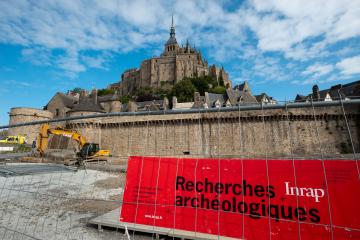
L’INRAP FOUILLE AU MONT-SAINT-MICHEL


En 2005, une équipe de l’Inrap avait mis au jour de nombreux moules en schiste destinés à la fabrication d’enseignes de pèlerinage, à l’emplacement d’un atelier de production daté des XIVe-XVe siècles, près de l’entrée de l’abbaye. La variété et la qualité de ces pièces en font aujourd’hui une collection de référence en archéologie médiévale.
En 2011, les archéologues ont révélé les vestiges d’une tour des fortifications, la tour Denis, ouvrage édifié vers 1479 et détruit en 1732.
En 2015, d’anciennes maisons, donnant sur la grève et détruites en 1368, ont été étudiées.

Dans l’abbaye, l’Inrap a suivi plusieurs chantiers de restauration conduits par l’architecte en chef des Monuments historiques dont les opérations importantes menées sur la Merveille, sur l’ancienne Hôtellerie de Robert de Torigny et sur les Logis abbatiaux.
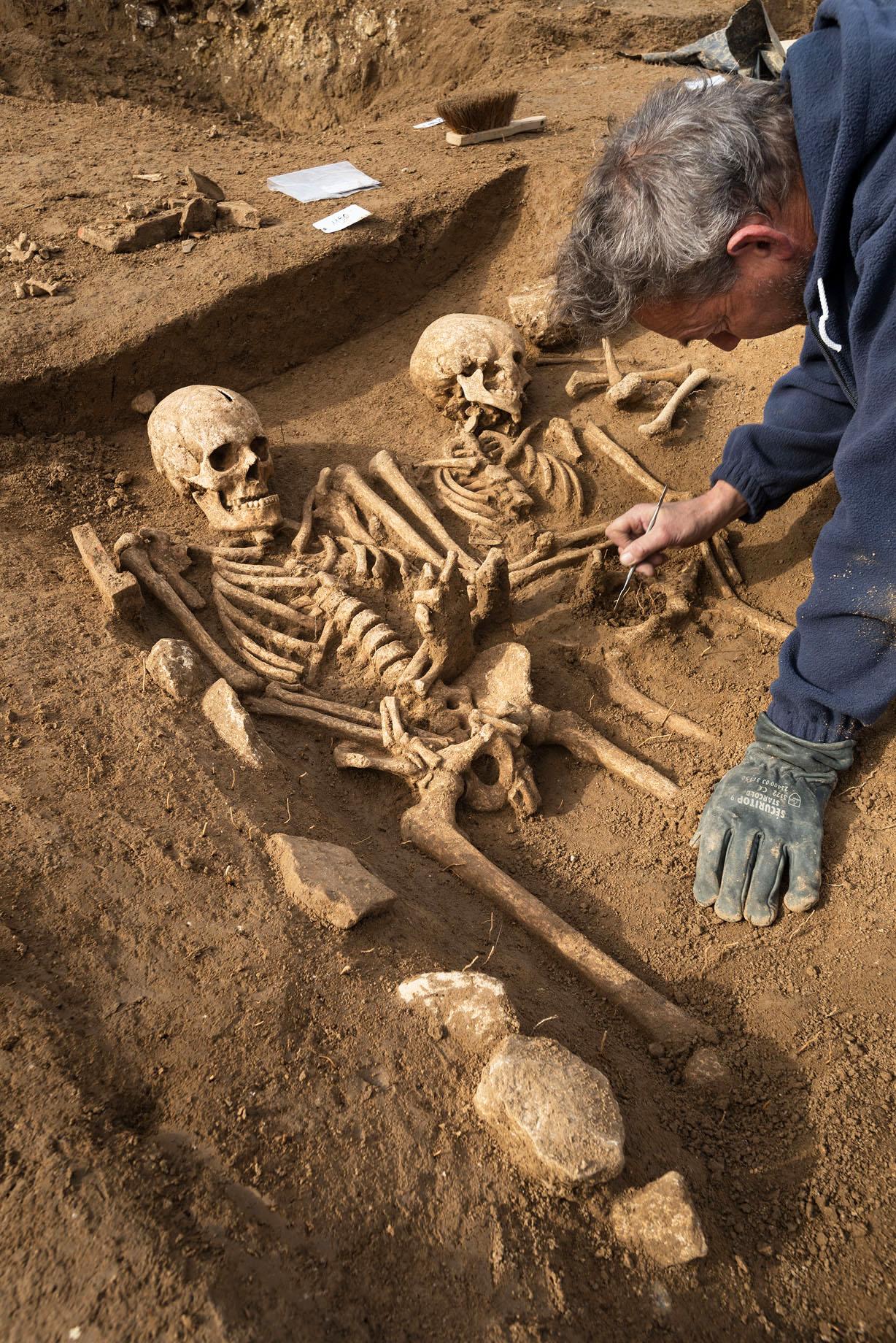
Aujourd’hui, la recherche des fortifications et de la porte du XIIIe siècle a permis la découverte, inattendue, du cimetière paroissial.

Read the rest of this article...

Thursday, 15 December 2016

LE GRAND PARIS EXPRESS, LIGNE 15 SUD : ARCHÉOLOGIE EN GARE DE VITRY CENTRE


La fouille du Parc du Coteau à Vitry-sur-Seine est située en bordure de la RD 605, héritière de la voie romaine qui reliait Paris à Sens. La première construction est un édifice ostentatoire élevé au cours du Haut-Empire. À la fin du IIIe siècle ou au début du siècle suivant, un espace funéraire enclos de fossés est établi en périphérie de cet édifice, ce qui oriente l’interprétation au bénéfice d’un mausolée. La nécropole, organisée en petits groupes de tombes, est fréquentée jusqu’à la fin du haut Moyen Âge, probablement jusqu’au début du XIe siècle. Abandonnée dans un premier temps, la zone est réoccupée aux XIIe-XIIIe siècles par des carrières d’extraction de limon sableux, probablement à destination des tuileries installées de l’autre côté de la voie et dont la mémoire est conservée dans la toponymie. Certaines salles des carrières sont ensuite transformées en caves et ont conservé cette fonction jusqu’à nos jours.

Read the rest of this article...

Tuesday, 13 December 2016

Watch Richard III The King in the Car Park: Telegraph Now Showing


When a skeleton was found under a council car park in Leicester in September 2012, the news broke around the world. Could these be the remains, lost for 500 years, of our most infamous King, Richard III?

The discovery of the body, and the battery of scientific tests conducted to establish its identity, were carried out in complete secrecy. This film – made by the only team allowed to follow the scientists – tells every twist and turn of the story. 

Richard III: The King in the Car Park is one of several shows available to watch for free as part of our Telegraph Now Showing series. Until the end of January, enjoy watching a range of quality dramas and documentaries including The Hour, Joanna Lumley's Jewel in the Nile and Miracle of the Hudson Plane Crash.

Read the rest of this article...

Friday, 9 December 2016

An Archaeological Study of the Bayeux Tapestry by Trevor Rowley


An Archaeological Study of the Bayeux Tapestry is the latest book by Trevor Rowley.

“An Archaeological Study of the Bayeux Tapestry provides a unique re-examination
of this famous piece of work through the historical geography and archaeology of
the tapestry. Trevor Rowley is the first author to have analysed the tapestry through
the landscapes, buildings and structures shown, such as towns and castles, while
comparing them to the landscapes, buildings, ruins and earthworks which can be
seen today. By comparing illustrated extracts from the tapestry to historical and
contemporary illustrations, maps and reconstructions Rowley is able to provide the
reader with a unique visual setting against which they are able to place the events
on the tapestry.”


Tuesday, 6 December 2016

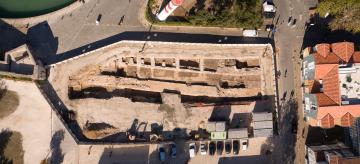
FOUILLES ARCHÉOLOGIQUES AU PIED DE LA TOUR SAINT-NICOLAS À LA ROCHELLE : PREMIERS RÉSULTATS


Si la première mention de La Rochelle apparaît dans une charte de l’abbaye Saint-Cyprien de Poitiers (998-1000), la ville ne se développe véritablement qu’à partir du XIIe siècle. La première enceinte de ville, probablement fondée dans les années 1160-70, permet d’asseoir le statut de cette nouvelle cité portuaire qui s’émancipe progressivement des pouvoirs locaux, notamment au début du XIIIesiècle en englobant deux nouveaux quartiers - Saint-Jean du Perrot et Saint-Nicolas.

CONTEXTE HISTORIQUE

Le quartier du Gabut, situé entre le rivage et le quartier Saint-Nicolas, est partiellement intégré à la ville à la fin du XIVe siècle, suite à la construction d’une nouvelle enceinte reliant la tour Saint-Nicolas à la porte du même nom. Ce secteur de la ville se développe ensuite progressivement. Des bâtiments très allongés (corderies, magasins pour l’artillerie) sont en effet représentés sur les plans de la période moderne et perdurent jusqu’au démantèlement de l’enceinte, à la fin du XIXe siècle.
Read the rest of this article...

Tuesday, 29 November 2016

Pembroke Castle study uncovers possible Henry VII birthplace


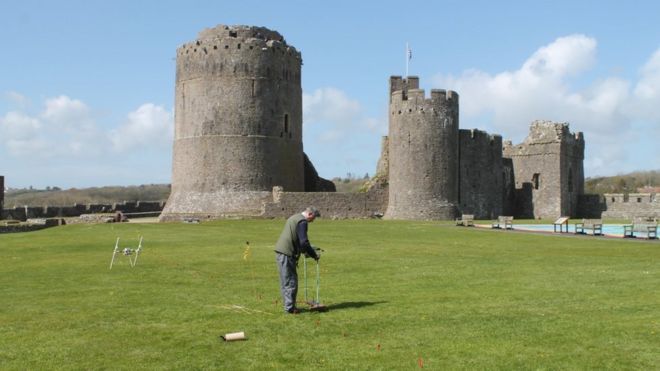
Researchers believe they might have uncovered the location of Henry VII's birthplace at Pembroke Castle.
Aerial photographs from 2013 gave glimpses of what lay beneath the surface, with parch marks revealing possible buildings.
geophysical survey has now confirmed the outline of a late-medieval building in the outer ward, where the king could have been born.
Neil Ludlow, consultant archaeologist, said it shone new light on the castle.
Much of the interior of the castle, which dates from the 11th Century, was destroyed after the Middle Ages.

Read the rest of this article...